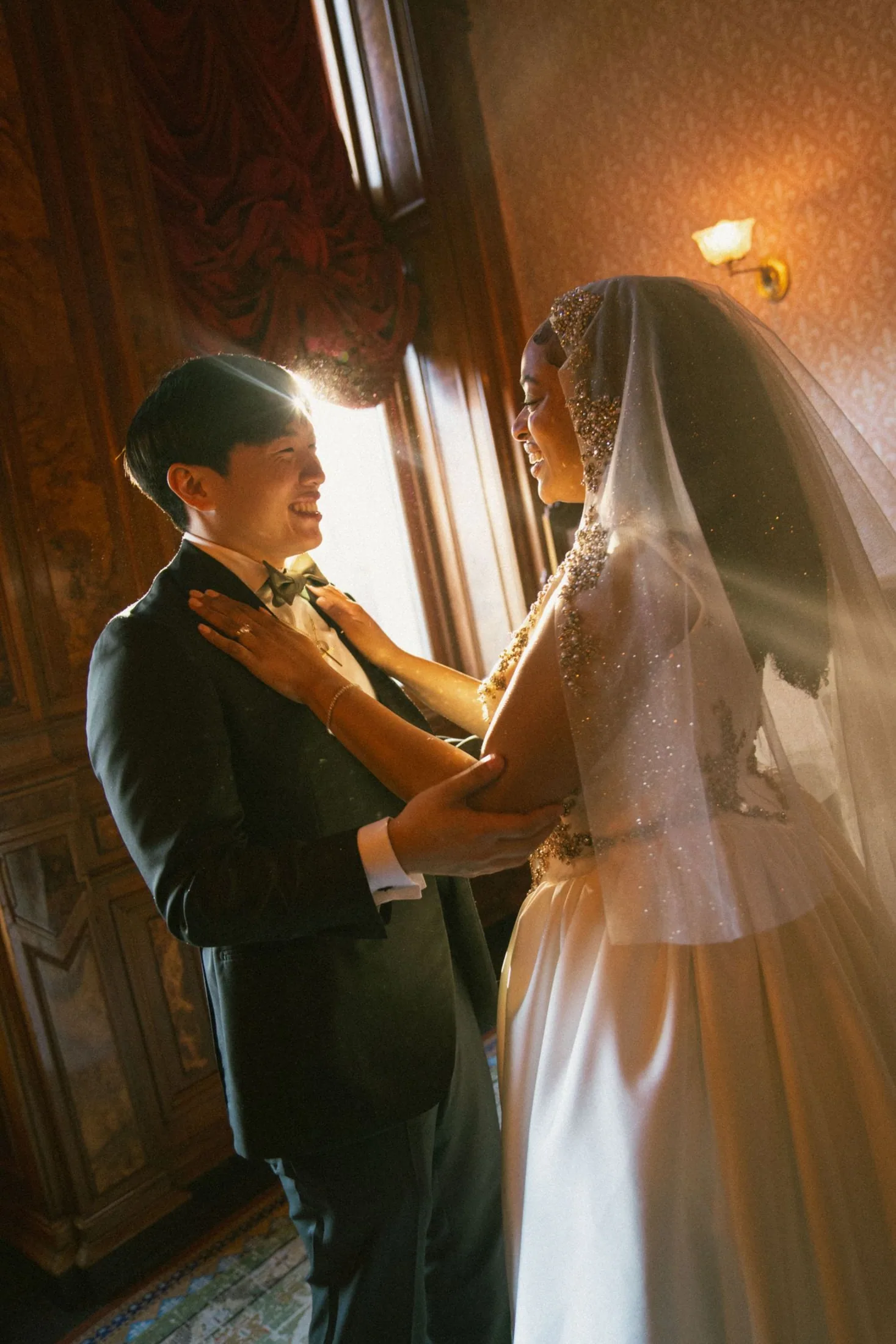
The goal is not to photograph every minute. It is to give the meaningful parts enough room that no one feels hurried through them.
Start with breathing room
Small transitions take longer on a wedding day: gathering people, touching up, moving between floors, loading a car, or simply pausing for a conversation. Add buffers around travel and group photographs instead of scheduling every block back-to-back.
Keep getting-ready coverage intentional
The strongest preparation photographs often happen after the room is calm and the most distracting clutter is tucked away. Build enough time for details, final touches, and a few quiet minutes with the people closest to you.
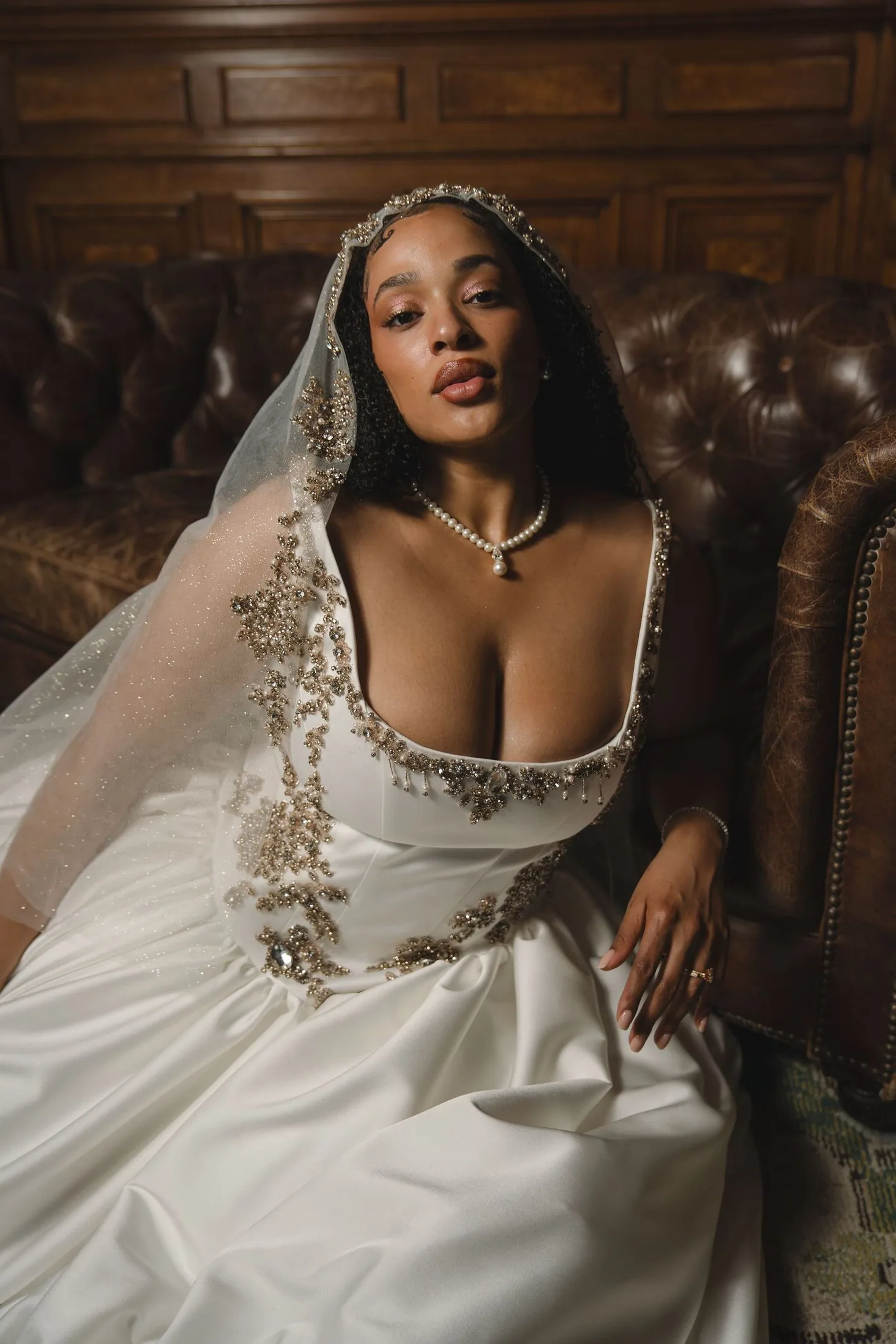
Make the family list before the wedding
Keep the list concise, identify any sensitive relationships, and ask one person from each side to help gather relatives. That preparation turns a potentially long interruption into an organized, meaningful part of the day.
Split portraits into short, useful windows
You do not need to disappear for an hour. A short window after a first look or ceremony, plus ten minutes in better evening light, often creates more variety and lets you return to your guests.
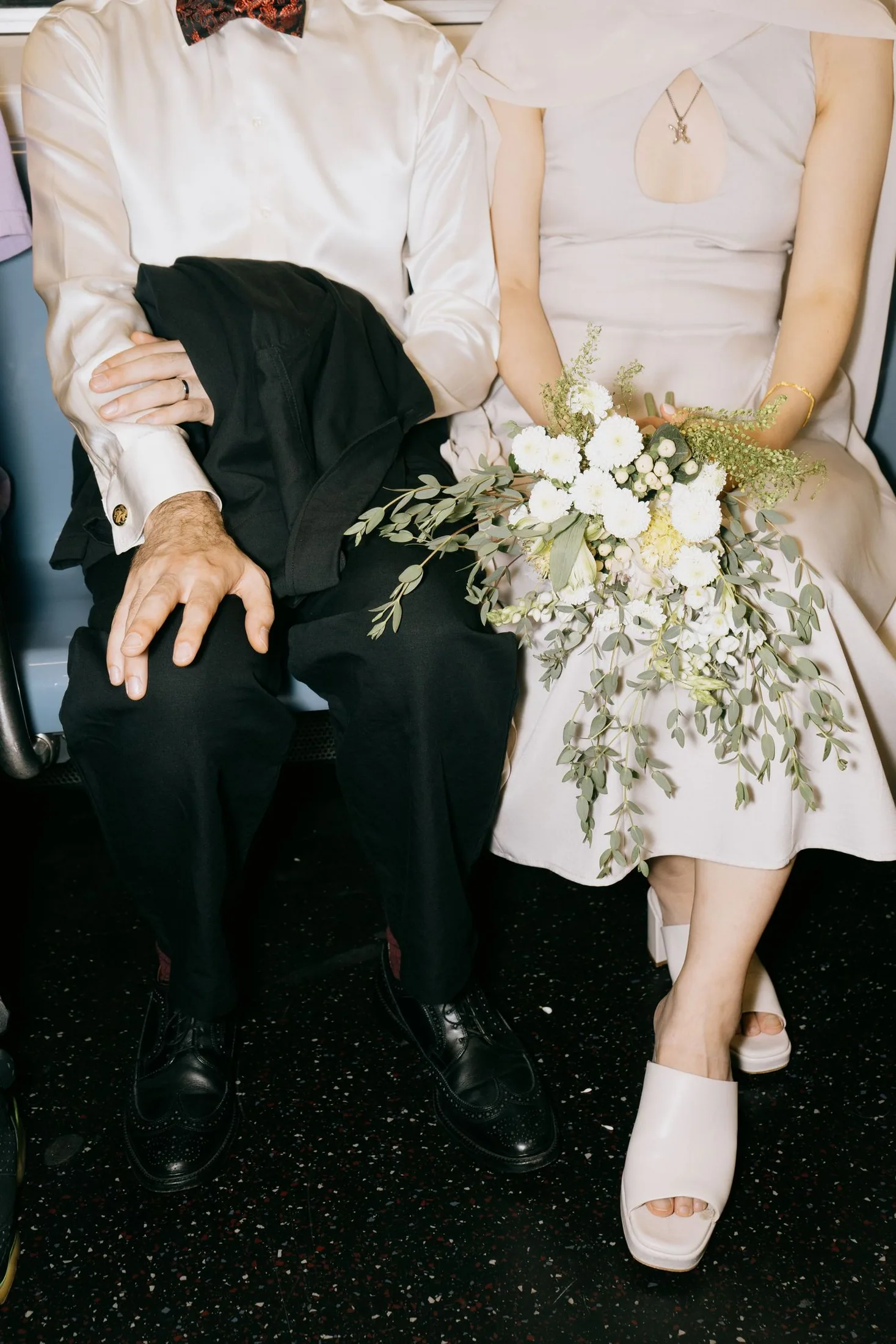
A flexible full-day flow
- Preparation: details, atmosphere, and final touches.
- First look or pre-ceremony: optional portraits and immediate family.
- Ceremony: arrivals through the recessional.
- Post-ceremony: concise family groups and wedding-party portraits.
- Cocktail hour: guests, room details, and a short couple session.
- Reception: entrances, dinner, speeches, traditions, and dancing.
- Evening: ten quiet minutes together if the light or city feels right.
Your actual timeline should follow your venue, traditions, priorities, and people. This framework is a starting point, not a rule.
Build your photography plan